Four Tips to Help You Understand Your Complicated Tax Forms
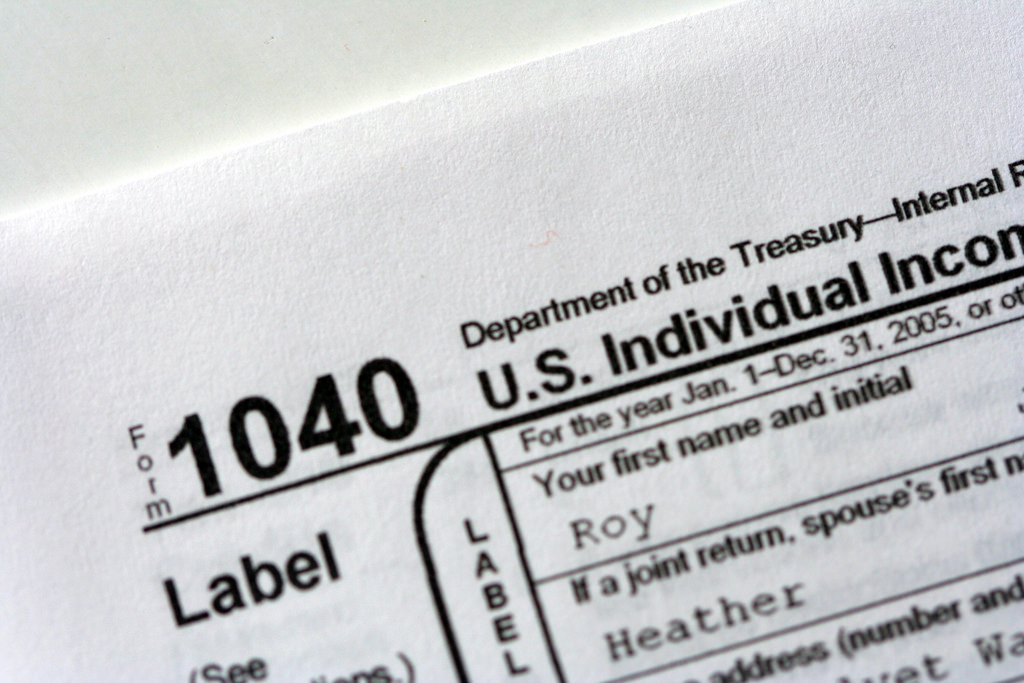
Complicated Tax Forms
Tax forms can be complicated and confusing, especially if you have no accounting background. Here are four pieces of advice which you can use to decipher your tax forms:
Seek Advice
Not really sure how to fill out that complicated tax form? Ask your CPA for advice. He or she can give you advice and wisdom on how to accurately fill out your forms.
Discuss Tax Laws
In order to understand your tax forms, you have to first understand the tax laws which apply to you. As you understand the tax laws, you will be able to determine how to effectively fill out your forms with greater precision and speed.
Embrace Mistakes
Often, people are afraid of making mistakes on their tax forms, and for this reason these people end up failing to file their forms in a timely fashion or at all. Mistakes could be costly; however, not filing at all could land you in even more hot water. Don’t let a fear of making errors prevent you from filing your return; just be sure to learn from your mistakes and incorporate your newly acquired knowledge during future tax seasons.
Do Your Research
Afraid to ask for advice on how to fill out those complicated tax forms but you know you desperately need help? Do your research. Don’t be afraid to ask questions, and most of all don’t be afraid to admit that you have no idea what you’re doing. The key to gaining knowledge is to first acknowledge what you don’t know.
What tips have helped you to better understand complicated tax forms? Leave your comments below.
Image credit: John Morgan
What Happens if You File a False Tax Return?
Filing a false tax return leads to serious consequences and it’s something that is commonly caught by the IRS. When filing a fraudulent tax return, fines issued can extend up to $250,000 for individuals and up to $500,000 for a corporation. This can also be accompanied by a 3 year prison sentence if prosecuted as a high dollar tax fraud case.
Tax Fraud
One of two things will happen if you are facing suspicion of tax fraud. If the investigation is dealing with less than $100,000, the IRS will typically issue a letter in the mail and ask for repayment immediately. You can either oblige and pay the balance in full, setup a payment plan with the IRS, or simply ignore it.
Ignoring the letter will lead to the IRS initiating a formal investigation. Prosecution will then follow should the IRS find sufficient grounds to do so.
If the IRS finds tax fraud to be well over $100,000, the IRS will immediately issue a formal investigation and you will most likely be contacted by two IRS agents who will question you. It’s best to hold off on answering all questions and getting an attorney present immediately to finish the questioning with the IRS.
Let your attorney know if you were guilty of the tax fraud so they can work out a plea bargain with the IRS to minimize the prison sentence and associated fees. If you didn’t commit the crime, present all your documentation to your attorney so they can get your investigation situated in the court with relevant information and paperwork.
Be careful when dealing with falsified tax returns because the consequences can lead to a ruined reputation.
Image credit: Investment Zen
Three Things You Should Do If You Miss the Income Tax Deadline
The cut-off date to file taxes in 2016 in the U.S. was April 18 due to a government-specific holiday observance. This means that the cut-off date for those receiving extensions is October 18. If you missed the filing deadline, do not panic. It is a rather simple thing to fix.
File ASAP
If you do not require an extension, file as soon as possible. You will be subject to late filing penalties. In some cases, you may be able to get the IRS to waive these penalties. If you are due a refund, the penalty will be taken directly out of the sum you are owed.
Contact the IRS for an Extension
You can file an extension or call the IRS directly. An extension gives you an additional six months to file if it is done before the tax filing deadline. The end of the extension period is typically October 15, but exceptions exist for government-observed holidays.
Make Payment Arrangements for Late Filing Penalties
If you owe any amount to the IRS, you will owe a little more once they tack on late filing penalties and interest. Make a payment arrangement with the IRS so that you can have time to pay what is owed. The IRS will setup a suitable payment arrangement with you.
Closing Thoughts
Time gets away from people and the tax filing deadline seems to approach faster every year. Start early, as soon as all of your required documents have been received. The earlier you start on your return, the less likely you are to miss the filing deadline.
Image credit: Chris Potter
Three Most Common Tax Mistakes
Mistakes on tax returns can trigger audits and lead to rejected returns. It is important to double and triple check your returns before filing them to prevent delays in processing your returns. Below are the three mistakes which are most commonly made on tax returns.
Transposed Numbers
Transposing numbers is easy to do. It is important to enter two or three digits at a time, and use something to keep your place when transferring long series of numbers. A pencil or highlighter is a good way to maintain your place in the sequence.
Misspelled Names
It is rather unlikely that you will misspell your name or a family member’s name, but tax professionals can make mistakes. It is necessary that you double-check all names before submitting returns. Even check that your children’s names are properly spelled as that can have an effect on your return.
Incorrect Filing Statuses
If you are married, your filing status has to match, especially when you opt to choose the married filing separately option. If you are a single parent or in a domestic partnership, you and your partner should decide who will claim head of household. Single parents should make sure they can claim their children as both parents cannot claim the same child.
Final Thoughts
Take the extra few minutes to check all of your calculations, spellings, and sign your forms. Make sure that you have completed all of the additional forms and worksheets associated with your return. Run through your entire return, even electronic versions, before submitting your return.
Image credit: Miran Rijavec
Form 1099-R Explained
The 1099-R form is used to show distribution when you receive $10 or more from your retirement account. This system is used to interpret the circulation of retirement benefits such as your pensions, annuities, rollovers, and IRAs.
Pension and Annuity
These benefits are arranged between a qualified employer’s retirement plan and an employee. Income taxes on most employment plans are postponed; that is, these funds later contribute to your pension and so they are not taxed until they are withdrawn by the employee. Pension and annuity payments are distributed to retired, disabled, and sometimes deceased taxpayers.
Rollovers
A rollover is an act which moves one guardian’s retirement funds to another without paying taxes. Indirect rollovers occur when the owner of the account re-deposits the retirement funds into another account. To avoid early distribution penalties, the funds must be rolled over into a qualifying account within 60 days of the deposit.
IRAs
An individual retirement account (IRA) is a type of savings account with two different methods of helping you save for retirement, traditional and Roth. With the Roth IRA you contribute with post-tax capital and get to take out the money tax-free when you retire. The Traditional IRA takes pre-tax dollars but the taxpayer gets taxed later when they take the money out after retirement.
Closing Thoughts
While the 1099-R form can be daunting at a first glance, pensions, annuities, rollovers, and IRAs all offer great benefits to taxpayers. Establishing an IRA or 401(k) and understanding the inner workings of a 1099-R form can only assist your lifestyle for the future.
Image credit: Ervins Strauhmanis


